

"Soft" is still 180 micrometres
A normal soft brush carries around 600 nylon filaments, each roughly 180 micrometres thick with a cut end. On an inflamed gum line that end behaves like a blunt edge, which is why the sink turns pink.
¿Tienes una cuenta?
Inicia sesión para finalizar tus compras con mayor rapidez.
OFERTA DE VERANO HASTA 50% DE DESCUENTO + REGALOS
OFERTA DE VERANO HASTA 50% DE DESCUENTO + REGALOS
OFERTA DE VERANO HASTA 50% DE DESCUENTO + REGALOS
OFERTA DE VERANO HASTA 50% DE DESCUENTO + REGALOS
OFERTA DE VERANO HASTA 50% DE DESCUENTO + REGALOS
OFERTA DE VERANO HASTA 50% DE DESCUENTO + REGALOS
OFERTA DE VERANO HASTA 50% DE DESCUENTO + REGALOS
OFERTA DE VERANO HASTA 50% DE DESCUENTO + REGALOS
OFERTA DE VERANO HASTA 50% DE DESCUENTO + REGALOS
OFERTA DE VERANO HASTA 50% DE DESCUENTO + REGALOS
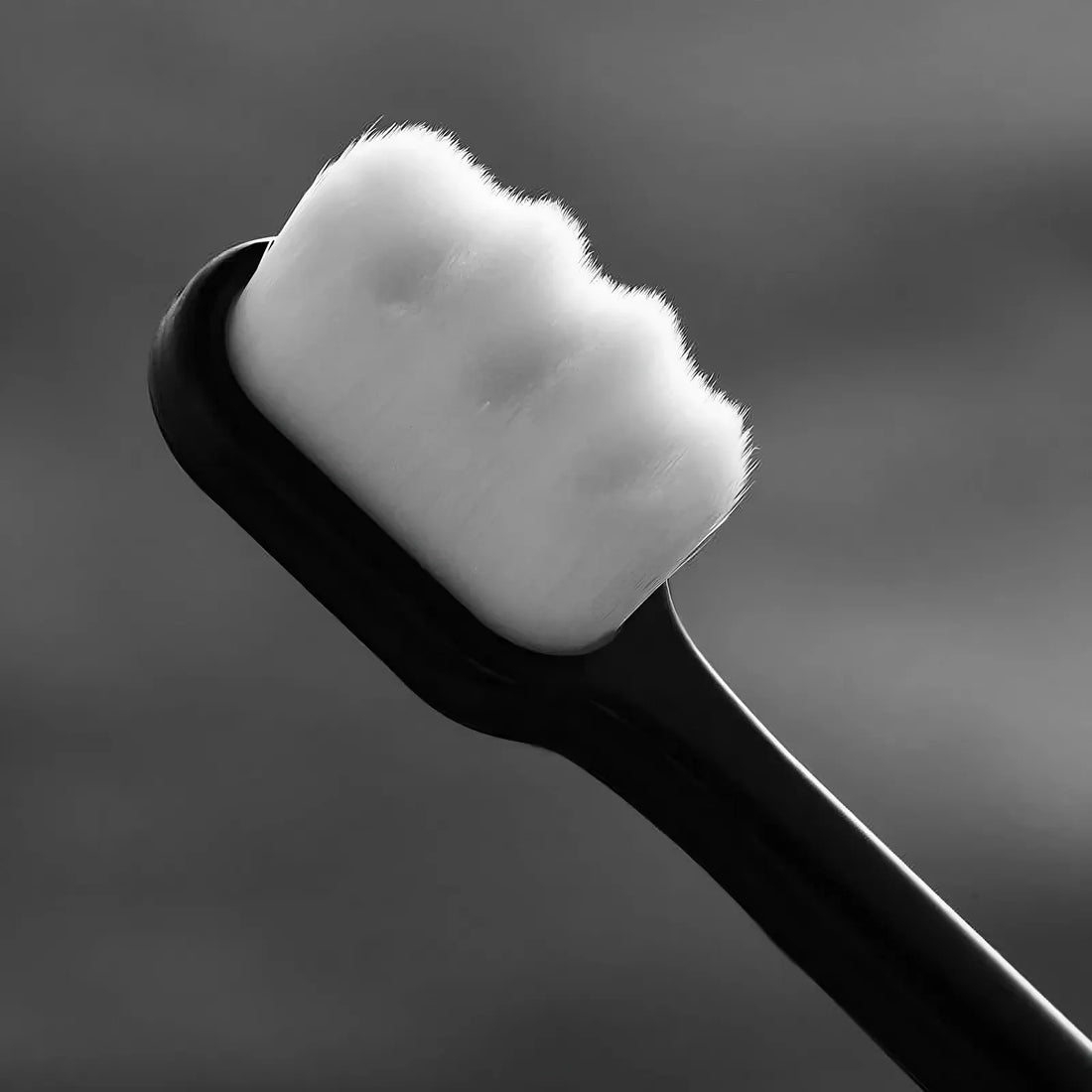
12,000 filaments at 80 micrometres. Soft enough for a bleeding gum line, fine enough to reach the gaps a normal brush rides straight over.
Three things nobody mentions at the checkout aisle, and what changes when the bristle gets thinner instead of softer.
A normal soft brush carries around 600 nylon filaments, each roughly 180 micrometres thick with a cut end. On an inflamed gum line that end behaves like a blunt edge, which is why the sink turns pink.
Once brushing hurts, most people brush shorter and skip the gum line entirely. Plaque then sits exactly where it does the most damage, and the gum recedes further. Gum tissue rarely grows back.
Half the thickness, twenty times the count. The head behaves like a polishing pad instead of a scrub, covering more tooth surface per stroke and slipping into the gaps a coarse brush simply rides over.
It replaces your toothpaste rather than joining it. Three steps, and the second one is the one people get wrong.
Tip a small scoop of CollaGum straight onto the dry bristle head. No water first — water thins the powder before it reaches the tooth and most of it ends up in the sink.
Rest the head against the gum line and move in small circles for two minutes. Let the 12,000 filaments do the work. Pressing is the habit a coarse brush taught you, and it is what pushes the gum back.
Spit the excess out and leave it. The barrier needs 30 to 45 seconds undisturbed to bond to the enamel. A hard rinse at this point washes off the part you paid for.
600 bristles against 12,000
Softness is a marketing word. Thickness is a measurement — and it is the one that decides whether your gum line survives the morning.

Verified buyers

I had bled every single morning for about four years and assumed that was just my mouth. Turns out it was the brush. Nothing in the sink since week three.

Went in for the six-month check expecting the usual lecture about brushing too hard. He asked what I had changed. I said I stopped pressing and started using the powder with it.

Bought the brush on its own to try it cheap. It is genuinely lovely to use, but nothing was rebuilding. Ordered the powder two weeks later and wished I had just taken the set.
30-day money-back guarantee · the brush is also available on its own
Two items. The powder that rebuilds the mineral barrier, and the only brush soft enough to put it there without wiping it off again. Neither does much on its own.

30-day money-back guarantee — no questions asked.

Three weeks in and there is nothing in the sink any more. I had honestly stopped believing that was a brush problem.
Cleaning comes from surface contact, not from pressure. A coarse brush touches the tooth at roughly 600 points. This one touches it at 12,000, so each stroke covers far more enamel and reaches into the gaps a thick filament rides straight over. What you lose is the scraping, not the plaque.
CollaGum needs 30 to 45 seconds of contact with the tooth to bond into a mineral barrier. A coarse brush physically wipes that layer off before it sets, which is why people give up on powders and think they did nothing. A filament at 80 micrometres lays it down instead of scraping it away.
Every three months, the same as any brush, or sooner once the head starts to lose its shape. The filaments are fine by design, which is exactly what makes them safe on tender tissue — so treat a splayed head as a sign it has done its work.
Only in one way: stop pressing. Let the head rest against the tooth and move in small circles along the gum line for two minutes. The pressure most people apply was compensation for a brush that could not reach — this one does not need it.